Unite your teams for high-velocity service management.

When the stakes are high, we'll help you deliver applications you can be proud of.

Get a free strategic assessment

An Atlassian Service Collection implementation connects Dev, IT, and business. That means you can deliver faster, reduce risk, and scale service across the enterprise.
Legacy ITSM platforms create silos that slow innovation and increase operational risk. Service Collection does the opposite: it accelerates the flow of work by uniting teams on a single AI-powered platform. We deliver outcome-focused implementations that unlock velocity and give you the competitive advantage modern businesses demand.

Trusted By


The business case for change

Your competitive position depends on speed and reliability. Legacy ITSM is undermining both.

Service delivery velocity directly impacts revenue, customer retention, and market position. Yet most organizations are hamstrung by disconnected tools that create invisible friction at every handoff.

Innovation is slower than your competitors

Your development teams ship code, but service requests sit in queues because IT has no visibility into priorities. Change approvals take days because approvers lack context on business impact. Your release velocity is constrained not by engineering capacity, but by tooling that can't keep up with modern DevOps practices.

The real cost: Delayed features, missed market windows, and competitors who move faster because their teams are actually connected.

Why senior IT leaders choose Service Collection

Service Collection gives you more than better ITSM. It's a strategic platform decision that aligns with how modern businesses operate.
hand drawn scrum icon (3)
Strategic outcome 1

Accelerate time to market

Connect Dev, IT, and business teams on one AI-powered platform so work flows instead of stalls. Service requests become development work items automatically. Changes integrate with CI/CD pipelines. Incidents link to deployments. Your release velocity increases because friction disappears.

Strategic outcome 2

Reduce operational risk

Full visibility into what's changing, what's impacted, and what's at risk. Change management sees deployments in real-time. Incident response has complete context. Asset management tracks dependencies. Your operations team makes decisions with complete information instead of educated guesses.

What this means for your business: Better uptime, faster recovery, fewer preventable incidents, board-level confidence.

Key capabilities:

  • Automated change risk assessment based on deployment data
  • Incident response with full deployment and configuration context
  • Dependency mapping across services and infrastructure
  • Integration with monitoring and observability tools
  • AI-powered suggestions for resolution based on similar incidents
Atlassian logo
Strategic outcome 3

We deliver Atlassian implementation mastery right where you need it most.

Empower teams across IT, HR, facilities, legal, finance to deliver service experiences without creating more work for central IT. AI-powered self-service deflects routine requests. Knowledge management scales expertise. Workflows adapt to different team needs while maintaining governance.

What this means for your business: Service delivery that scales with growth, reduced central IT bottlenecks, better employee experience.

Key capabilities:

  • AI virtual agents for 24/7 self-service support
  • Knowledge management with AI-powered article creation and gap detection
  • Multi-department service portals with unified experience
  • Workflow automation that reduces manual work
  • Analytics showing deflection rates, satisfaction, and efficiency gains

Why we're the right partner for this transformation

We understand the strategic stakes

This isn't a tools project. It's a transformation that impacts release velocity, operational resilience, and your ability to scale. We've been helping IT leaders at enterprise healthcare systems, financial services firms, and retail chains for over 10 years.

Outcome-focused Jira implementation

Our approach is built around measurable outcomes: faster time-to-market, reduced MTTR, improved service delivery efficiency. We track these metrics from baseline through optimization and tie them to business impact.

Transfer capability to avoid dependency

Through structured knowledge transfer and team mentoring, we build your internal capability to own and evolve the platform. You won't need us forever. That's the point.

Simplify licensing and reduce costs

As an Atlassian Solution Partner, we provide complimentary licensing services at no added cost. We'll never charge more than Atlassian's direct pricing, we proactively manage renewals to prevent surprises, audit add-ons to flag potential overspend, and ensure you benefit from every applicable Atlassian incentive. Your procurement team will appreciate the simplified renewals and cost control.

Jira Service Management results

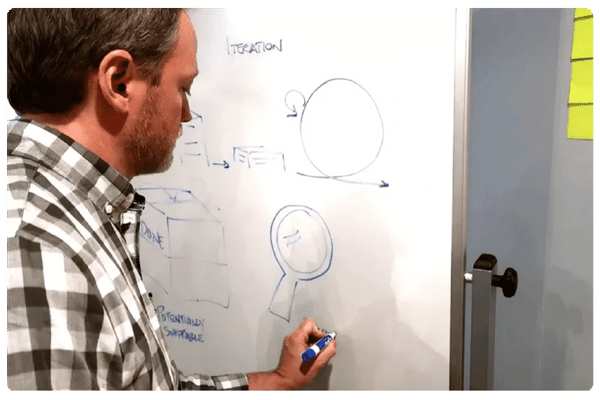
John at whiteboard

Real-world examples

Here are three examples of what you stand to gain from the Jira Service Collection.
3,800 stores across 12 markets

Domino's Pizza Enterprises

The client consolidated 6 fragmented ITSM tools (ServiceNow, PagerDuty, Zendesk) into Service Collection. Created end-to-end visibility between support and engineering teams. Rolled out service catalog in 4 months vs. 4 years on previous platform. Result: unified platform supporting global operations with 2.3 hours/week saved using AI.

Financial Technology Leader

WEX

The client migrated from Cherwell to accelerate fintech innovation. Achieved 25% automation rate, 17% increase in admin productivity, 20% improvement in MTTR, and 60% decrease in ticket escalation. Successfully expanded from IT to HR service management.

160,000 employees, renewable energy leader

ENGIE Mexico

The client switched from ServiceNow to Service Collection, saving 67% on licensing costs while gaining Premium capabilities. Saved 200 hours monthly through automation. Achieved 100% SLA compliance. Migrated 1,700 users in 3 months and expanded to HR for employee lifecycle management.

Enterprise transformation with JSM

Our approach

We don't follow a rigid methodology. We work iteratively, deliver value early, and adapt based on what we learn. You'll see working capabilities in weeks, not months.

Discover and align

 We work with your teams to understand current state and define what success looks like.

How we work:

  • Collaborative working sessions with your leadership and teams
  • Map current pain points to business impact
  • Define target outcomes
  • Build rough business case for the transformation
  • Identify biggest risks and how to mitigate them
  • Agree on realistic timeline based on your complexity and change capacity

What you'll have: Shared understanding of the problem, clear success criteria, and confidence in the path forward.

Prove value fast

We get something real in your hands quickly—a working pilot that proves the concept.

How we work:

  • Stand up pilot environment for one team or use case
  • Configure workflows based on how work actually happens
  • Run real work through the system with real users
  • Learn what works, what doesn't, adapt immediately
  • Demonstrate tangible value before committing to full rollout

What you'll have: Working Service Collection instance with one team actually using it. Data on what's working. Confidence to scale or pivot.

Scale what works

We expand based on what we learned, not based on what we planned.

How we work:

  • Rollout in phases by team/department or to the enterprise
  • Continue refining workflows based on actual usage
  • Develop business continuity plan together to eliminate downtime risk and maintain operations throughout migration
  • Adjust approach based on feedback and adoption metrics

What you'll have: Service Collection running for multiple teams. Migration de-risked. Teams productive and adoption growing.

Optimize and transfer ownership

We make you self-sufficient while continuing to optimize based on real patterns.

How we work:

  • Train teams on workflows that matter to their work
  • Hands-on support during transition—pair with your admins
  • Optimize based on actual usage patterns, not theoretical best practices
  • Coach your team to own the platform evolution
  • Continuous improvement based on metrics and feedback

What you'll have: Your team running the Service Collection independently. Continuous improvement loop established. Measured outcomes tied to business goals.

How Atlassian’s Service Collection compares to alternatives

Atlassian Service Collection vs. ServiceNow

Service Collection advantage: 3x faster new implementation (1.2 months vs. 4.5 months), transparent pricing, modern DevOps integration, lower total cost of ownership. Built for agility, not just ITIL compliance.

When ServiceNow fits: You have dedicated budget for extensive customization and ongoing ServiceNow consultants.

Atlassian Service Collection vs. Freshservice

Service Collection advantage: Enterprise-grade ITSM with full change, incident, problem, and asset management integrated with development workflows. Deep DevOps capabilities. Scales to thousands of users across multiple departments.

When Freshservice fits: You're a small IT team with simple needs. Your IT and development teams are completely separate. You prioritize ease of deployment over enterprise capabilities.

Atlassian Service Collection vs. Zendesk

Service Collection advantage: Purpose-built for internal IT service management and DevOps workflows. Full ITSM capabilities. Enterprise service management across all business teams. Integration with development tools.

When Zendesk fits: Your primary need is external customer support ticketing. You don't need ITSM processes. Multi-channel customer support is your core use case.

The strategic advantage across all comparisons:

Service Collection is the only platform that truly unites development, IT operations, and business teams. This isn't a feature—it's a fundamental architectural advantage that accelerates innovation, reduces risk, and scales service delivery in ways legacy platforms simply cannot.

How to get started with Jira Service Management

Transform service delivery

Schedule your complimentary strategic assessment

Let's discuss your specific situation—current challenges, strategic objectives, and whether Service Collection aligns with where you're taking the organization.

What you'll get:

  • Assessment of your current setup and migration complexity
  • Realistic timeline for your organization
  • Rough cost estimate for planning
  • Recommended migration approach
  • Clear next steps if you decide to move forward

Key questions answered

Our Atlassian consultants are happy to answer all of your questions. Here are some of the most frequent things we get asked about Atlassian Service Collection and Jira Service Management,
What's the typical timeline and how do you minimize disruption?

Timeline varies by organization. New implementations can take 6-8 weeks, complex migrations from large legacy systems can take months. Depends on your complexity, existing technical debt, change capacity, and how aggressive you want to be. You control the pace based on your risk tolerance and change capacity. We'll give you a realistic timeline in the assessment after we understand your specific situation.

How do you ensure ROI?

We establish baseline metrics in discovery (change approval time, incident MTTR, request volume, service delivery costs) and track improvement post-launch. Most organizations see positive ROI within 6-12 months through reduced licensing costs, improved efficiency, and faster delivery velocity.

What happens to our existing integrations and customizations?

We assess everything during discovery. Some integrations port directly. Others need rebuilding (often simpler and better). Some customizations are technical debt from legacy constraints — we help you determine what's actually valuable vs. what was workarounds for platform limitations.

How do you handle change management with skeptical teams?

Executive sponsorship is critical. We work with your leadership to build the vision and business case. Then we engage teams early, helping them understand this is about learning valuable new skills and growing their capability — not being replaced. We run pilots that demonstrate real value, communicate wins visibly, and provide hands-on training and support throughout the transition. Adoption is a first-class concern, not an afterthought.

What's included in the complimentary strategic assessment?

A working session with your team where we:

  • Review your current ITSM environment and pain points 
  • Assess migration complexity and technical requirements 
  • Identify integration needs and potential gotchas 
  • Provide a realistic timeline tailored to your situation
  • Give you a ballpark budget so there are no surprises 

You'll walk away with a clear picture of what this would actually take for your organization — timeline, cost, and approach. No obligation to move forward.